
Polish Invasion 2012: Destination U.K.!
If you’re planning to be in, on or anywhere near the U.K. this fall, start preparing yourself for the Play Poland Film Festival.
Not interested you say?
Considering that the festival spans nearly three months and will be staged between 11 different cities throughout the region, you can assume that like it or not Play Poland will find you.
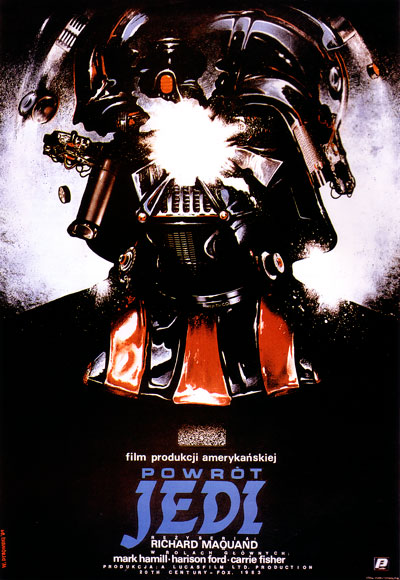
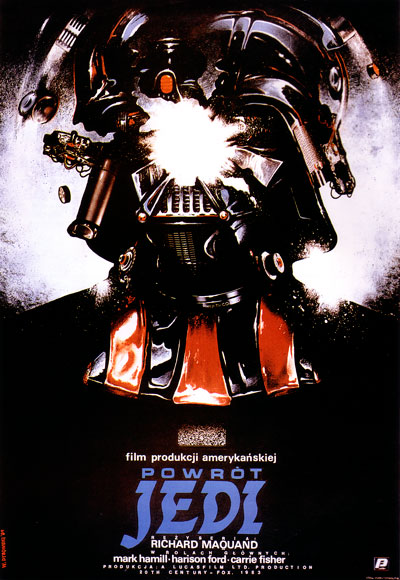
Polish poster for Return of the Jedi, 1983, by Witold Dybowski
If you’re not familiar with the lay of the land, allow me.
In previous eras it was standard that foreign markets produce their own promotional support material when U.S. films finally washed ashore. Naturally the text that appeared on posters would need to be changed to suit the native language, and often the title of the film itself would change. A fairly benign example is ‘Starman’ becoming in Polish ‘Gwiezdny Przybysz’ (‘Stellar Newcomer’). In Polish ‘Starman’ doesn’t mean shit.
And depending on the market, a revised look would come into play if a distributor felt that a local audience would be swayed by a different visual approach. In some situations this was a fairly minor shift, removing or adding a character’s face, and in others it was a complete and radical re-interpretation of the film through the eyes of a local artist. In Poland and most of Eastern Europe the latter ethos was the norm from the mid-60s through the late 1980s.
Artists by the names of Andrzej Krajewski, Anrzej Pagowski, Eryk Lipiński, Franciszek Starowieyski, Jacek Neugebauer, Jakub Erol, Jan Młodożeniec, Jerzy Flisak, and Jerzy Treutler were at the center of this ‘Polish School’. Their output was darker and more shocking than their American counterparts, presumably reflecting the bitter landscape of a post-War Poland.
The posters themselves were mass produced but certainly not in phenomenal numbers. Whereas U.S. movie posters of the time were printed in the thousands, the Polish versions were likely output at no more than 100 pieces each. So examples do exist today but are increasingly rare. The exhibit that’s being shown in conjunction with Play Poland is an opportunity to see these works together that will probably not be repeated for some time.
Here are some personal favorites that will likely appear at the show.
-
- Polish film poster for Alien.
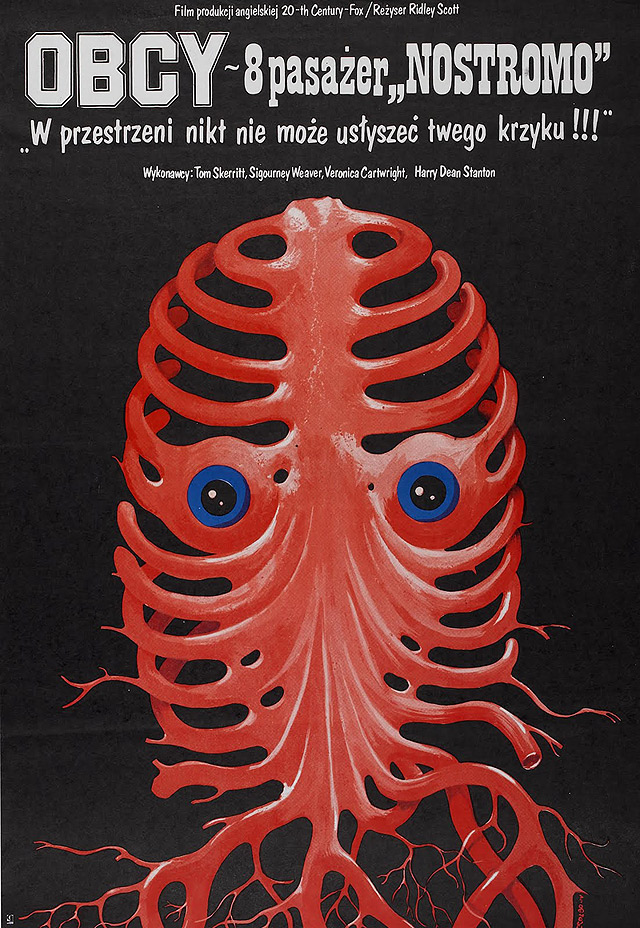
-
- Polish film poster for Christine.
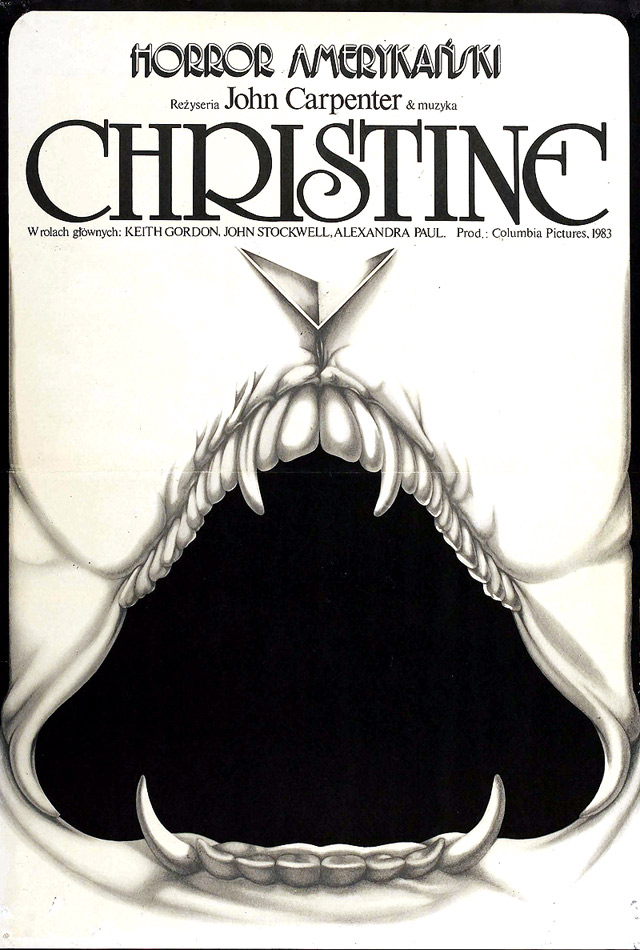
-
- Polish film poster for Close Encounters of the Third Kind.
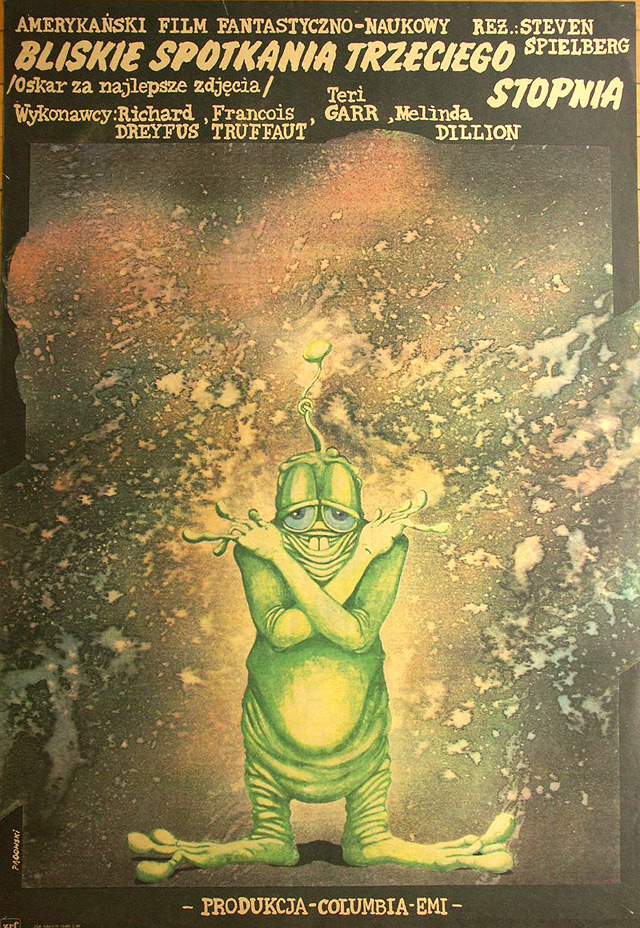
-
- Polish film poster for The Empire Strikes Back.
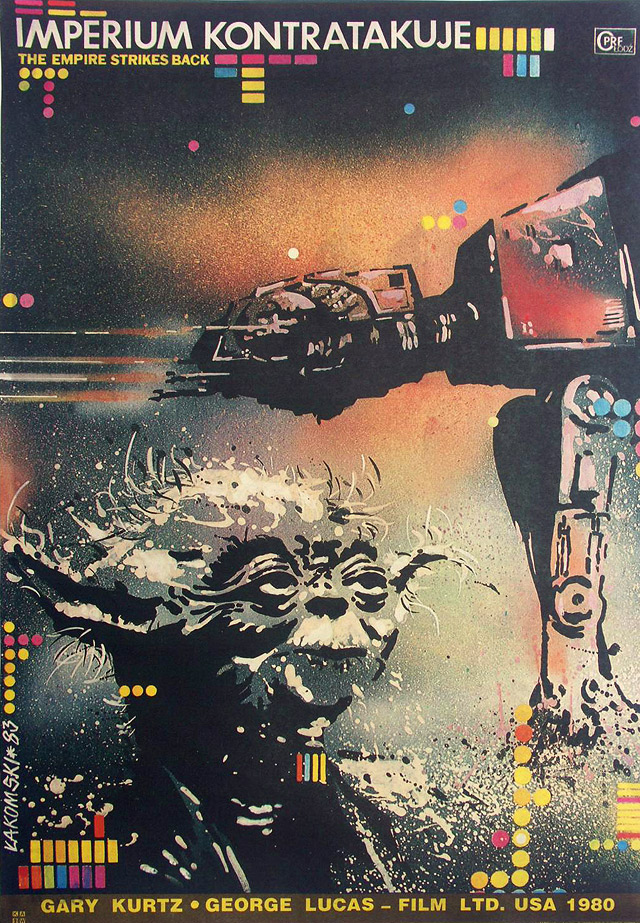
-
- Polish film poster for Ghandi.
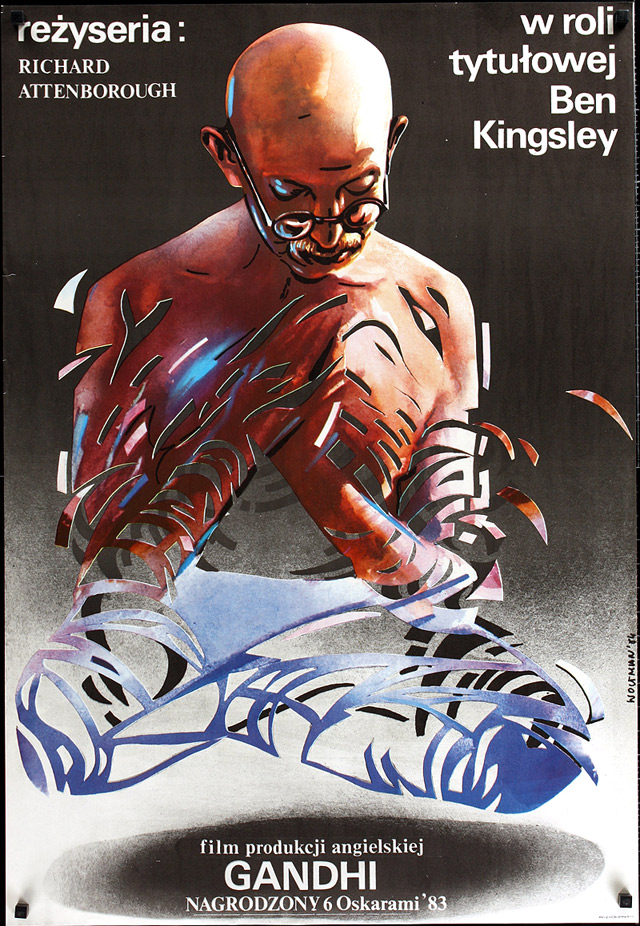
-
- Polish film poster for Harry and the Hendersons.
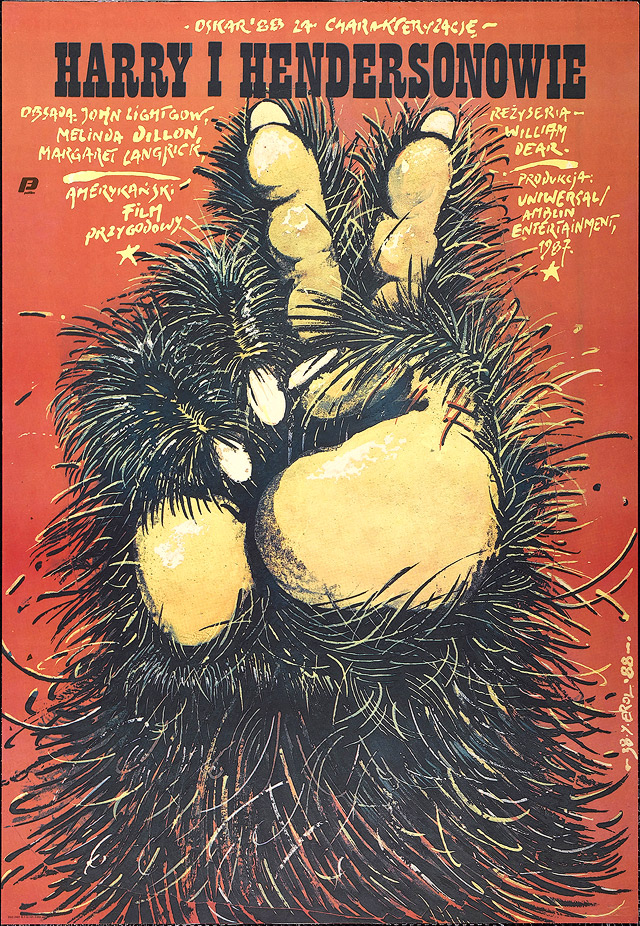
-
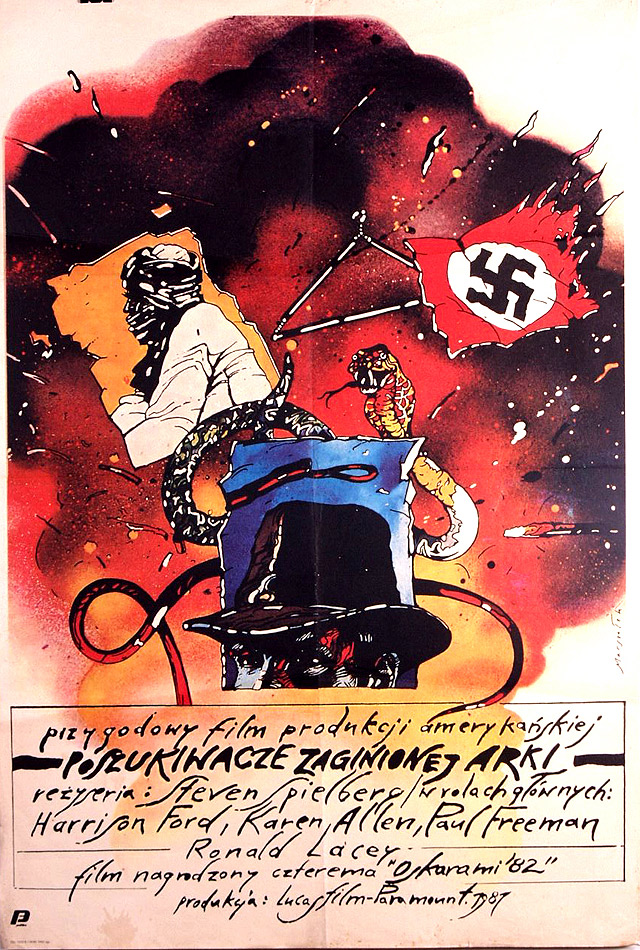
- Polish film poster for Raiders of the Lost Ark.
-
- Polish film poster for Starman.
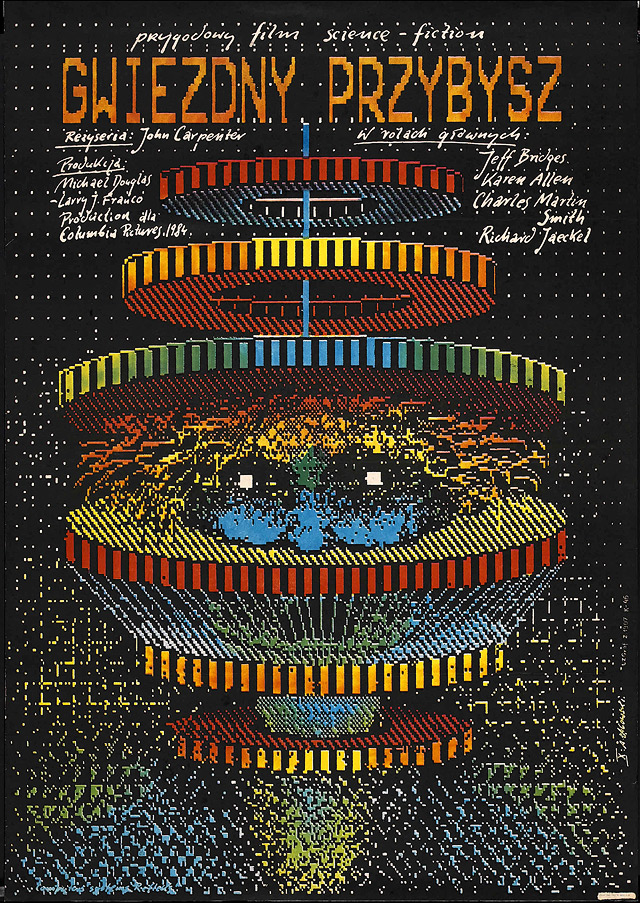
-
- Polish film poster for Jaws.
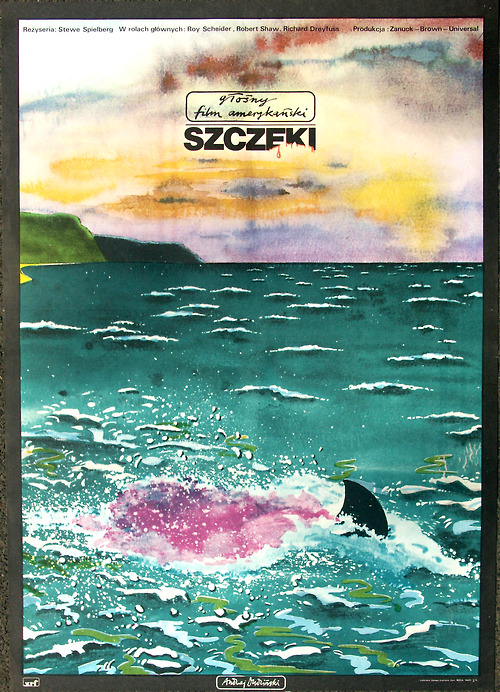
-
- Polish film poster for Return of the Jedi, 1983.

The Play Poland Film Festival runs from September 28 through December 12, 2012. More information is available here.